Leaking customer, employee or financial information is the biggest nightmare for a company's reputation, 87.2 per cent of communications and marketing professionals said. Phishing came second (61.5 per cent) and ransomware attacks third (53.8 per cent). However, despite the high awareness of the threats, only 38 per cent of organisations have a detailed crisis communication plan in the context of cyber threats, according to the report 'Cyber threats and the image of an organisation' prepared by the agency dfusion communication.
The study reveals a paradox: although respondents in the survey perceive cyber threats as a serious risk to an organisation's reputation (46 per cent rate them as 'very high' and 41 per cent as 'high'), in practice, the organisation's preparedness leaves much to be desired. One in five professionals (21 per cent) do not know whether their company has any plan at all for managing communications in response to a cyber attack. Additionally, 23 per cent of organisations only have a generic plan that does not take into account the specifics of cyber threats.
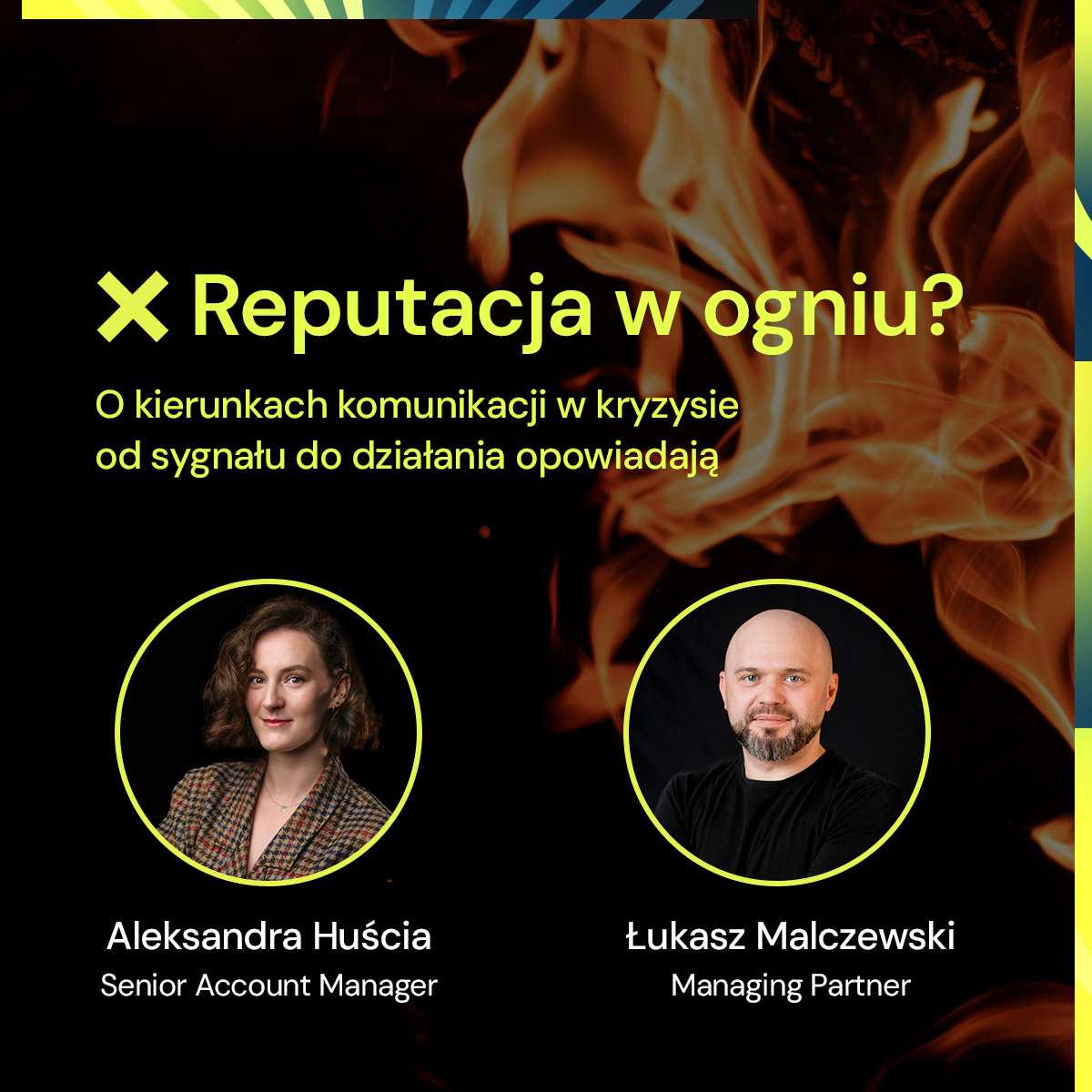
The cyber security of an organisation is not only based on technology, but also on effective communication - because often finances and data can be recovered, while reputation remains the most difficult to rebuild. Therefore, organisations should take care not only of technical safeguards, but also of clear procedures and a consistent message to help them maintain their image even in difficult moments - Aleksandra Huścia, Senior Account Manager, dfusion Communication, explains.
Trust is of the highest value
The most painful consequence of a cyber attack is not financial loss, but the loss of trust of customers or business partners towards the organisation - 69.2 per cent of respondents indicate this. It is reputation that becomes that most valuable asset that organisations can still defend when systems go down and data leaks online.
- Companies in Poland are increasingly aware of cyber threats and their immediate consequences in terms of loss of brand trust. This result highlights that brand trust is seen as a strategic issue Another key aspect is the way we communicate. Unfortunately, language often fails to keep up with the pace of cyber threats. That is why it is so important to work closely with communications departments that can translate difficult industry language into simple messages - comments Iwona Kruk, Communications Manager, Central and Eastern Europe at Uber.
Legal procedures instead of simulations
Meanwhile, organisations are focusing on basic security: 59 per cent implement legal and organisational procedures and 53.8 per cent conduct regular security audits. The problem is that only 28.2 per cent regularly simulate crisis scenarios - and it is exercises that show whether a plan will work in practice.
Sometimes it all starts with a silent system alert, other times with an inconspicuous post on the web. It's not yet a crisis, but it's a moment when control can be gained or lost. Not every incident makes it to the front pages of the media, but every incident has that potential. It is the first few minutes that determine how a story ends. - emphasises Lukasz Malczewski, Managing Partner, dfusion communication.
In addition, a key barrier to effective crisis management is a lack of quick access to facts (59 per cent of indications) and a lack of clear, understandable and practice-tested internal procedures (41 per cent). And yet, respondents emphasise that the most important aspects of communication in a crisis are internal cooperation (94.9 per cent), transparency (87.2 per cent) or up-to-date information (46.2 per cent).
From fake leaks to deepfakes
Disinformation threats are becoming a new field of concern. Deepfake, a technology that allows the creation of fake audio and video content, is of concern to 43.6 per cent of professionals. Almost as many (41 per cent) point to fake leaks, i.e. the deliberate dissemination of false information to damage reputations. Despite this, only 39 per cent of organisations have procedures in place to respond to deepfake incidents, 23 per cent do not know if such procedures exist at all, while 13 per cent do not have such procedures in place and do not intend to create them.
Cyber attack: a matter for the whole organisation
The dfusion communication report makes it clear that an effective defence against a cyber crisis requires not only safeguards in the form of technology, but above all people and organisational culture. Experts emphasise the need for organisations to act quickly and efficiently to take appropriate action in the face of a crisis:
- Transparency and speed are key to rebuilding trust. When it comes to cyber threats, many companies confuse a lack of transparency with data protection. Meanwhile, in terms of communication, both the media, business partners and end users need to know first and foremost how the companies they entrust with their data are securing it and, in a crisis situation, how they intend to protect it - concludes Iwona Kruk.
About the study:
The survey 'Cyber threats and the image of the organisation' was conducted by the dfusion communication agency in June 2025 among 55 communication and marketing professionals operating in the Polish market.